Carrabassett Valley Network

connecting the valley…

Carrabassett Valley Network

Medicare Scams

Five tips to help you avoid being taken advantage of as you shop for medical coverage

Buttons on a keyboard that read scam alert

As Medicare’s 60 million beneficiaries pore over their choices for coverage for everything from medical services to prescription drugs, government officials warn that this is prime time for fraudsters to try to scam older consumers.

“Do your research and use trusted sources,” advises Jason Adler, assistant director of the Federal Trade Commission’s Midwest regional office. The FTC monitors the latest ploys that criminals use to get people’s Social Security or credit card numbers and other personal information that can help them cheat Americans. Adler says the best place to get information about your Medicare coverage or enrollment is either Medicare.gov or by calling the Medicare hotline at 800-MEDICARE (800-633-4227).


Navigate coverage options, prescription rules and more at our Medicare Resource Center.


Here are some common scams and Adler’s tips on how to thwart them.

Scam 1 

Someone calls claiming to be from Medicare and says your Medicare number and credit card information are needed to sign you up for health coverage.

Solution: Hang up the phone. “Anyone calling saying they’re an official Medicare agent selling you insurance is a scammer,” Adler says. Medicare does not call beneficiaries to sign them up.

Scam 2

Someone calls saying you have to sign up for a Part D Prescription Drug plan or you’ll lose your Medicare coverage.

Solution: That pitch is “just not true,” Adler assures. So hang up the phone. Buying a Part D plan is completely voluntary, he says, and has nothing to do with the rest of your Medicare coverage.

Scam 3

Someone calls claiming to be a Medicare representative and says your billing information must be confirmed to keep your coverage active.

Solution: Again, hang up. Medicare employees will not cold-call you and are not allowed to ask for payment information on the phone or online.

Scam 4

An alleged insurance agent or broker calls to offer you a great deal on a Medicare supplemental insurance (or Medigap plan) or a Medicare Advantage private insurance plan.

Solution: This one is a little trickier. Listen to the person’s pitch and ask for information in writing. If the agent is sending you an email, Adler says to make sure you have a virus scanner on your computer and don’t click on a link that sends you to an unfamiliar website. You can also call your state insurance department to make sure that the company the caller says he represents is legitimate.

Chances are, if the caller is a scammer, once you start asking questions and refuse to turn over any personal or credit card information, the individual will hang up.

Scam 5

Someone calls asking for your new Medicare number to update your account and to send you the latest open enrollment information.

Solution: Stop. Do not give out your new Medicare number over the phone. Earlier this year, Medicare began mailing out updated cards that have an 11-character identifier that replaces Social Security numbers.

“We’ve seen scammers calling consumers saying that they need their information so they can get their new Medicare card or that they have to pay a fee to get their new card,” Adler says. “Those things are false.”

Medicare cards are free. New cards have been mailed to enrollees in 33 states and the District of Columbia and are in the mail to consumers in the other 17 states. If you haven’t received your card, you can go to the Centers for Medicare and Medicaid Services’ new Medicare card website to check on the status of the mailing to your state as well as to sign up for an email alert when your card is mailed.

Scams related to Veterans

Veterans Day was this past weekend, and we want veterans to know that scammers go to great lengths to target their money, their benefits, and their commitment to current and former soldiers.

How It Works:

Targeting veterans can take many forms:

  • The Update Your Military File Scam: A caller claims to be from the Department of Veterans Affairs and asks to “update” your information, but really is hoping to get personal information to steal your credit.
  • Veterans Choice Program (VCP) Scam: Scammers set up a phone number nearly identical to the number veterans dial to find out if they are eligible to use approved health care providers outside of the VA system. A recorded message or a person answering the phone tells the caller of a rebate he can get by supplying credit card information. Make sure to dial the correct number for the VCP: 1-866-606-8198.
  • Charity Scams: A caller claims to be raising money for disabled veterans or veterans with cancer. They play on sympathy to try to evoke an immediate response. But often, the so-called charity is not registered with the government and/or uses most of the money to raise more funds and pay their salaries.
  • The Cash for Benefits Scheme: Predatory lenders target veterans in need of money by offering cash in exchange for future disability or pension payments. These buyouts are typically a fraction of the value of the benefit.
  • Employment Scams: Con artists post bogus job offers to recruit veterans on various online job boards. The scammer may use or sell your personal information provided in the job application. It’s likely a scam if you have to pay to get the job, you need to supply credit card or banking information, or the ad is for “previously undisclosed” federal government jobs.

What You Should Know:

  • If you are a veteran, you are unfortunately a target, so be mindful of this reality in your day-to-day transactions.
  • The Veterans Administration will never call you, e-mail or text you to verify or update your information.
  • The old adage applies here – if it’s too good to be true, it usually is.

What You Should Do:

  • Check out charities at  www.charitynavigator.org before giving any money. Make donations directly to the veterans’ organizations you know.
  • Only work with VA-accredited representatives when dealing with VA benefits; you can search for them online at the VA Office of General Counsel website.
  • Visit aarp.org/veterans to download your copy of the AARP Watchdog Alert Handbook: 9 Ways Con Artists Target Veterans. 

Nomorobo

Many people have registered with the FTC National Do Not Call Registry, however it will not stop all unwanted calls.  The “Do Not Call” registry prohibits sales calls so you may still receive political, charitable, debt collection and informational calls, as well as telephone survey calls.  In addition, companies may still call if you have recently done business with them or if you have given written permission to call you.  If you ask a company not to call you again, it must honor your request. ( record the date of your request).

There is also a website, www.nomorobo.com where you can register your landline phone for free that will stop most robocalls that you still might get after registering with the FTC.  If a robocaller dials your number, your phone will ring once and Nomorobo will intercept the call.

A mobile application for your cell phone is available for $1.99 a month, but there is no charge to register a regular landline phone.

P.S. I have used Nomorobo on my own landline and it works like a charm.  One ring and Nomorobo intercepts the call.


Hi-tech Scams

Beware of these dangerous hi-tech scams  

By now, most of us know about the most obvious scams — we avoid phishing emails, letters from Nigerian princes, phone calls from guys claiming to represent Microsoft’s tech support, and we sometimes even remember to check the ATM for the presence of a skimmer. But there’s a whole new generation of scams out there, with criminals hoping to catch you unaware with an innovative con. Here are some dangerous ruses to watch out for.

One-ring phone calls. If you’ve ever heard your phone ring once or twice and stop and then return the call to see who it was, then you’re the target audience for this particular con. Scammers use auto-dialers to randomly call vast banks of phones, but they only allow the target phones to ring once or twice before disconnecting. The expectation is that some people will return the call to see what they missed. And though the Caller ID might look like a typical U.S. number, The Federal Trade Commission says that in reality, they’re connecting to a premium service (like an adult entertainment number) that charges an exorbitant per-minute fee — as much as $9 per minute, plus a $20 international calling charge. The remedy? Don’t call back a number you don’t recognize. But be especially wary of area codes that include 268, 284, 473, 664, 649, 767, 809, 829, 849 and 876, since these are known offenders from the Caribbean.

Sticky ATMs. Skimmers are old news. There’s a new way criminals are trying to get at your credit card, and it’s at least as challenging to detect. Instead of inserting a device into the mechanism that swipes your card, criminals are starting to use adhesive to inhibit the operation of certain buttons on the keypad, meaning you can’t complete your transaction after inserting the card — and using foil in the mechanism to block the credit card from popping back out. Customers who run into these machines leave their card behind, and criminals waiting nearby then use a tool to complete the transaction and take your card as well. The good news, though, is that often there is a solution. According to police, the scam works because many people don’t realize they can perform many of the same actions on the touch screen as on the keypad. So if you’re stymied by the hardware try the screen instead.

Fake funerals. Fake funerals notices are the newest breed of email scam that include poisoned links. Once again, the FTC is on hand to provide a warning: In a nutshell, criminals send fake funeral notices, often mimicking real funeral homes. The email doesn’t indicate whom the service is for, so recipients have to open the included link for details. And of course, the link is malicious and pushes malware onto the PC.

Scam Refunds. If you’ve been bitten by ransomware or a similar crime, in which your PC is held hostage by malware unless you pay a ransom fee, you might now be targeted by a new scam — this time, promising to refund your money. As reported by Identify Theft 911, an ID theft management company, emails have been found in the wild that purport to be from Microsoft or other large tech companies and offer a refund for any losses you had from previous malware. The catch? You need to provide financial information so the refund can be direct deposited. Criminals assume that if you fell for malware once, you might be naive enough to pay a second time.

Reprinted from CBS Moneytalk. https://www.cbsnews.com/news/beware-of-these-dangerous-hi-tech-scams/#


Senior Living Contract

Senior living contracts (also called admission or residency agreements) come in many different forms depending on the community, type of care and your state. Though, no matter what type of senior living contract you’re entering into, it’s important to ensure you fully understand it before signing on the dotted line.Looking at the Details of a Senior Living Contract

Since most senior living contracts are full of industry and legal terms, it can be difficult to understand the complete terms of the agreement, which is why it’s beneficial to have an attorney review it on your behalf. See how you can take a more in-depth look at the details of a senior living contract and read other tips from A Place for Mom’s Legal Expert, Stuart Furman Esq.

How to Look at the Details of a Senior Living Contract

According to Furman, most families do not consult with an attorney before signing a senior living contract because they’re in a moment of crisis – there’s an available spot and the senior living community needs to know if they’ll take it right now. Other reasons include families becoming overwhelmed or not realizing that some aspects of the contract are negotiable.

Furman says that while some elements of a contract – like involuntary discharge – are not negotiable, others – like mandatory arbitration – might be.

“People don’t think they can change the terms,” he says, “but an attorney will help you understand what you’re signing, what the terminology really means and what is and isn’t negotiable.”

Key Things to Consider Before Signing a Senior Living Contract

When it comes to senior living contracts, here are some key things that you should understand before signing:

1. Cost of Living Increases

According to Furman, cost of living increases are often negotiable. The care provider should give adequate notice of a price increase, but it’s good to get that notice in writing.

If you don’t see anything in your contract about cost of living increases then ask the provider when the price will go up and how much notice they will give you. Then ask them to add these terms into the contract.

In addition to these areas, the American Bar Association has an excellent article called “Admissions Contracts for Senior Housing” about how to evaluate the different types of contracts out there. The publication also has a comprehensive list of questions you should ask about:

  • Accommodations and fees
  • Health care and services
  • State regulations and requirements
  • The care provider
  • The rights of residents

2. Involuntary Discharge

An involuntary discharge is when a resident is forced to leave their community against their wishes. Failure to pay rent is one reason for an involuntary discharge, but there are other health-related situations that are often out of the resident’s control. For example, a resident who has tuberculosis (TB) may be forced to leave their community due to the risk they pose to other residents.

No matter what type of senior living care you’re receiving, the community must meet state regulations which govern discharge situations. Furman, who specializes in elder law in the state of California, states that “Title 22” is a regulation that has defined prohibited conditions in which a resident can’t stay at a lower level of care than they need. In other words, if your care needs exceed the level of care that your community can offer, then you can’t stay. For example, if a resident has a gastric tube then they would need a skilled nurse (registered nurse) on staff to care for them. If their existing community doesn’t have skilled nurses then they may be forced to move. A review of what conditions would force an involuntary discharge and options if that occurs may be a valuable inquiry so that the family can be ready for any future healthcare event.

While certain terms of discharge are not negotiable, beware when this part of the contract is left too vague. Consumer Reports suggests that terms of discharge should be as specific as possible. Furman points out these terms are often left open because discharges happen on a case-by-case basis and a community is bound to follow state regulations. If you feel the contract you’re considering is too vague then ask for clarification or examples.

3. Mandatory Arbitration

A mandatory arbitration provision (sometimes called forced arbitration) is common in senior living contracts. This provision requires disagreements to be settled by a third party arbiter and not in court.

What is arbitration? According to Furman, arbitration was created as a process to help backlogged courts. Essentially, it’s a mini-trial that’s not public and is more relaxed when it comes to rules surrounding the evidence that’s allowed to be presented. Historically, arbitration typically helps the defendant because it limits post action rights and it’s done privately.

If you find a mandatory arbitration clause in your contract Furman recommends crossing it out. This is an area that is often negotiable. Consumer Reports also suggests striking this clause from the contract before signing it, saying that “there’s little risk that your loved one won’t be admitted if you try this. If the management insists that arbitration is mandatory, you can decide whether it’s worthwhile to agree.”

4. The Type of Contract

In continuing care retirement communities (CCRCs) or life plan communities, there are often three types of contracts:

  • Type A contracts are also known as extensive or life care contracts. In this type of contract, a resident pays a monthly, pre-determined service fee throughout their life, no matter the type of services they need or care they require.
  • Type B contracts are also known as modified or modified fee-for-service contracts. In this type of contract, residents pay an entry fee as well as some of the costs for assisted living and skilled nursing when this care is required.
  • Type C contracts are also known as fee-for-service contracts. In this type of contract, residents pay an entry fee as well as the full cost for assisted living and skilled nursing care when this care is required.

The best type of CCRC contract and fee structure will depend on your financial situation as well as your current and anticipated health care needs. McKnight’s Senior Living shares that Type A and C contracts have become more common in CCRCs over the past decade.

When it comes to a senior living contract, like all things, it’s critical that you understand what you’re signing. If you’re on a waiting list for an assisted living, memory care or independent senior living community, then ask for their standard contract so you have time to review it before space becomes available, because you’ll have very little time to do so once a spot is ready for you or your loved one.

Most senior living care providers will be happy to oblige because when you understand what you’re signing, you’ll have fewer disagreements and disputes in the future, which is a win-win for all involved.

One last thing: once you do sign the contract, ensure you get a copy and use it to hold your care provider accountable to the agreements they’ve made to you.

Reprinted from A Place for Mom.

 

Sweepstakes Fraudsters are using AARP’s Name

Phone with Warning Scammer Calling on the call screen

ALAMY

The AARP Fraud Watch Network says scammers are using AARP’s name to falsely notify older people by email or phone that they’ve won a big sweepstakes prize.

“AARP does not participate in sweepstakes or lotteries like this,” says AARP Foundation fraud expert Amy Nofziger. “They’re doing this under the AARP brand to offer more credibility to the older adult.”

According to the FTC, lottery and sweepstakes scams are among the most common types of fraud. Typically, individuals are asked to turn over a specific lump sum or financial information such as banking details in order to receive their winnings.

According to Nofziger, that request for money or information is a red flag. “You never have to prepay for any lottery or sweepstakes,” she says, which is true of  legitimate winnings from groups such as Publishers Clearing House.

Nofziger says it’s best to avoid contact with anyone claiming that you’ve won money from AARP. “Do not call the phone number, do not have any communications with these people,” Nofziger says. “This is 100 percent a scam.”

In general, Nofziger says, it’s important to ask yourself certain questions if you receive offers of money or other prizes. For instance: Are you being asked to provide advance payment or banking details? Did you enter the sweepstakes or contest in the first place?

For guidance or to report a suspected scam, call the AARP Fraud Watch Helpline (877-908-3360).

New Medicare Cards

Medicare Shows Off New Card Design

CENTERS FOR MEDICARE & MEDICAID SERVICES VIA AP

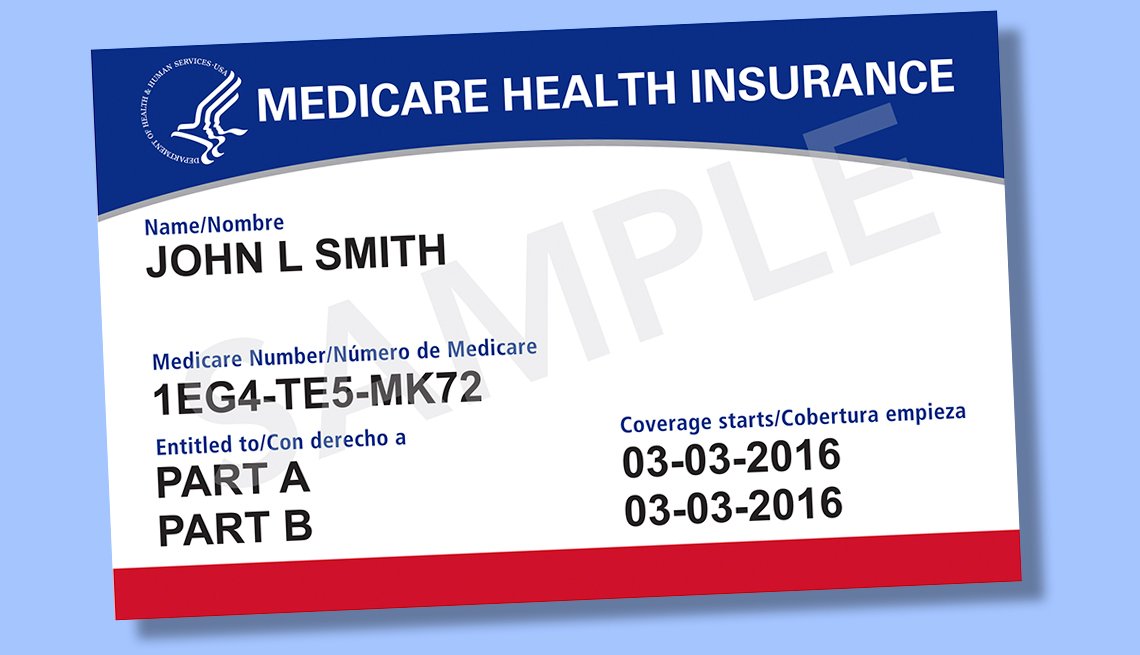
The new Medicare ID has been redesigned to prevent fraud and includes an 11-character, randomly assigned identifier, instead of a Social Security number.

If you live in the first group of states whose new Medicare cards have been mailed, but you haven’t received yours, federal officials offer instructions you can follow to track down your card.

The mailing has been completed in Delaware, the District of Columbia, Maryland, Pennsylvania, Virginia and West Virginia; residents there who have not received their card should log on to their mymedicare.gov account. If your card has been mailed, you’ll be able to see your new Medicare number or print an official copy of your card. If that doesn’t work, call the Medicare hotline at 800-633-4227. Officials there can tell you whether there might be a problem, such as a wrong mailing address. In the meantime, you can continue to use your old Medicare card.

You can also find out when your card is being mailed on a Centers for Medicare & Medicaid Services (CMS) web page that includes a map that tracks the progress of the mailing in each state and has a list of when enrollees in each state will start receiving their cards. The page invites beneficiaries to sign up for an email that CMS will send once their ID cards have been mailed.

Cards are now in the mail to beneficiaries in Alaska, American Samoa, Arkansas, California, Guam, Hawaii, Illinois, Indiana, Iowa, Kansas, Minnesota, Nebraska, North Dakota, Northern Mariana Islands, Oklahoma, Oregon, South Dakota and Wisconsin.

New Medicare members will receive the new version of the card as soon as they sign up, regardless of what state they live in. The ID, which has been redesigned to prevent fraud, is still red, white and blue, but instead of a Social Security number, the identifier is an 11-character, randomly assigned number that has no connection to an enrollee’s personal information.

It will take until April 2019 for all 60 million beneficiaries to get their new identification cards. You can begin using your card as soon as it arrives.

Fake Veteran Charities

Fake Veteran Charities

All charity scams are deplorable, but those pretending to raise funds to support our nation’s veterans are particularly shameful. Last week, the Federal Trade Commission, along with state charities regulators, announced a major takedown of fake veteran charities. .

Let’s hope these actions put a big dent in these scams, but chances are more will pop up. Here’s what you should know.

How It Works:

  • Fake charities use the same techniques as trusted charities to reach you—in person, by mail, over the phone, online, by text, or by e-mail—so be mindful across all of these methods.
  • The name of the fake veteran charity may closely resemble the name of a real charity.
  • The fake charity might ask you to wire money, donate by gift card or give cash—see this as a red flag.

What You Should Know:

  • Real veteran charities need your support, and they, like us, lose out when a scammer steals our donation and diverts resources away from legitimate organizations.
  • Scammers will put pressure on you to act quickly, before you have a chance to think through your decision or do any research.

What You Should Do:

  • When you do donate to a charity, use a check or credit card and keep records.
  • If you are approached in person, ask for identification and details about the charity, including its full name and address, and how they will use the funds. If the person cannot furnish this information, close your door or walk away.
  • Easily check out a charity before you give money to one. See how at www.ftc.gov/charity.

Beware of Secret Shopping Scam

Beware of Secret-Shopping Scam

FTC warns about the return of an old scheme

emails illustration caught with a fishing hook

The Federal Trade Commission is warning that an old scam involving fraudulent checks and shopping has again reared its head.

The Federal Trade Commission (FTC) is warning consumers to watch out for the resurgence of a long-standing scam that combines fake checks with secret shopping.

“We’ve been hearing a lot about it lately,” Emma Fletcher of the FTC’s Division of Consumer and Business Education wrote in an online consumer advisory.

“Here’s how it starts. You get a check in the mail with a job offer as a secret shopper. You deposit the check and see the funds in your account a few days later, and the bank even tells you the check has cleared.

“Now you’re off to the store you’ve been asked to shop at and report back on, often a Walmart. Your first assignment is to test the in-store money transfer service, like Western Union or MoneyGram, by sending some of the money you deposited. Or you might be told to use the money to buy reloadable cards or gift cards, such as iTunes cards. You’re instructed to send pictures of the cards or to give the numbers on the cards.

“Fast-forward days or weeks to the unhappy ending. The bank finds out the check you deposited is a fake, which means you’re on the hook for all that money.

Banks make money available from deposited checks in a few days, but a fake check can take weeks to be discovered. “By the time you try to get the money back from the money transfer service, the scammers are long gone, and they’ve taken all the money off the gift cards, too,” Fletcher advised.

The lesson: “If anyone ever asks you to deposit a check and then wire or send money in any way, you can bet it’s a scam.”

Reprinted from AARP


How to Get Rid of Junk Mail and Telemarketing Calls for Good.

How to Get Rid of Junk Mail and Telemarketing Calls for Good

As a child, I used to get so excited when I received something in the mail. Maybe it was because the only time I would get mail was either around my birthday or Christmas and it usually contained a check from my grandmother. Now, as an adult, my relationship with mail is quite the opposite. The only correspondence I receive is either bills or junk, neither of which I look forward to receiving.

While there is not much anyone can do to eliminate their bills, there are a few things you can do to get rid of junk mail. In fact, scams and spam seem to be on the rise via most methods of communication these days. Taking steps to declutter your mailbox and protect your phone number(s) can greatly minimize your frustration and reduce your vulnerability to fraud and identity theft.

How to Opt Out of Junk Mail

The first step toward eliminating a large portion of one’s junk mail is to participate in the DMAchoice program from the Data & Marketing Association (DMA). This program was created to give you control over what mail you receive and help the DMA’s more than 3,600 members avoid mailing to uninterested customers.

The categories of mail you may opt out of receiving include credit card offers, catalogs, magazine offers (such as subscription offers, newsletters, periodicals and other promotional mailings), donation requests, bank offers, retail promotions and more. You can choose to opt out of specific direct mail categories like the ones above or all of them. Once registered, the DMA forwards your preferences to the appropriate members.

To register, visit www.dmachoice.org and enter your information. There is a $2 fee to register online, but this registration lasts for 10 years. Caregivers also have the option to register on behalf of their care recipients to prevent them from receiving junk mail as well. Just visit the DMA website’s Do Not Contact for Caretakers page and follow the instructions. There is no cost for removing a vulnerable senior from the DMA’s databases.

Cancelling Pre-Approved Credit Offers

In the same way that DMAchoice works with member organizations to streamline marketing and promote consumer satisfaction, the OptOutPrescreen program works directly with the credit bureaus Experian, Equifax, TransUnion and Innovis to allow consumers to opt out of pre-approved and pre-screened credit and insurance offers.

To register for the program, visit OptOutPrescreen.com or call 888-567-8688. If you register online or by telephone, your registration is valid for five years. To opt out permanently, you will need to print, sign and mail back a permanent opt out election form. This form will be emailed to you when you register online or be mailed to you if you register by telephone.

Doing Away with Unsolicited Mail

In order to opt out of generic mail (the type that says “Dear Occupant” or “Current Resident”), you must directly contact the organization that sent you the solicitation. If you’d like to send a written request, provide your name and mailing address and state clearly that you wish to opt out from receiving future mail.

“Junk” Can Overwhelm Your Phone, Too

While junk mail is a nuisance that can literally pile up, unsolicited telephone calls can be equally as annoying but even more dangerous. Scammers will often call pretending to be from a legitimate organization in an attempt to get you to send them money or share your sensitive financial or identifying information.

One common scam is where the caller pretends to be from the IRS. He or she states that you owe money and if you do not pay within a certain timeframe you will be arrested. They use fear and intimidation to get the victim to do what they want.

But how can you tell which calls are legitimate and which are scams? It is often difficult to make that determination based on the call alone. One way to reduce, if not eliminate, legitimate solicitation calls is to register both your home and cell phone numbers on the Federal Trade Commission’s national Do Not Call Registry. Once you have registered, solicitors are prohibited from contacting you.

However, this does not apply to organizations with which you currently conduct business (known as established business relationships or “ERBs”) or tax-exempt organizations. You will still receive calls from entities you have given permission to contact you, like your bank, charities soliciting donations and—everyone’s favorite—political calls.

To register for this free service, call 1-888-382-1222 from the telephone number you wish to register. You can also register online at www.donotcall.gov. Keep in mind that this registration does not expire, so there is no need to ever re-register.

Telemarketers have 31 days from your registration date to remove your information from their call list and cease contact. If you receive a call after this 31-day period, notify the caller that you are on the national Do Not Call Registry and ask to be removed from their contact list. If they continue to call you, then you can report them online at the FTC’s complaint website. By law, organizations that are not tax exempt must remove a consumer’s contact information from their call list upon request.

This will not eliminate all calls, but it will greatly reduce the number of legitimate, unsolicited calls. You should be wary of whatever calls continue to come in from unknown sources. Here are a few indications that you’re talking to a scammer on the phone:

  • Caller is asking you to provide sensitive information
  • Caller is threatening or bullying you
  • Caller demands money, especially in the form of a money order
  • Caller refuses to remove your information from their call list
  • Caller claims to be from the IRS or another “official source” and demands money or sensitive information
  • Caller threatens your arrest if you do not comply

Also, don’t be fooled by what appears on your caller ID. Caller ID can easily be manipulated using free online tools. This process is called “spoofing.” I could call you and have the caller ID read “IRS” or “police station.” It really is just that simple.

Read: Fake Caller ID: Don’t Fall for Spoofing Scams

If you are in doubt when you receive an unsolicited telephone call, simply hang up the phone. If you get a call from someone claiming to be from your bank or credit card company, hang up and call the official telephone number printed on your bank statement or the number printed on the back of your credit card. If they claim to be from the IRS, you can visit the IRS website (www.irs.gov), and call them at the telephone number listed there. You get the idea. It’s always better to be safe than sorry.

Tackling Unwanted Text Messages

If you receive spam-type text messages on your cell phone, you can typically report it to your carrier by forwarding the text message to 7726. This works for AT&T, T-Mobile, Verizon, Sprint and Bell customers. They will then add this to their identified spam messages list and attempt to block the sending number. This process is similar to identifying an unsolicited email as spam or junk mail. Once you have labeled it as such, your email provider will block future emails from that sender from getting into your inbox.

The same handling rules for spam emails apply for text messages as well. Don’t reply to the sender, click on any links in the messages or provide any personal information. Legitimate businesses will not ask for your account or login information via text. The next safest thing after reporting the message to your carrier is to delete it immediately.

While you may not be able to block all potential frauds and scams, these tools will help you to eliminate most legitimate solicitors, making it easier for you to identify the remnants as fraudsters and scammers. At that point, you can simply toss the mail, hang up the telephone or delete the text

Reprinted from AgingCare.com