Everything from what you eat and drink to how much you move can affect the health of this vital organ
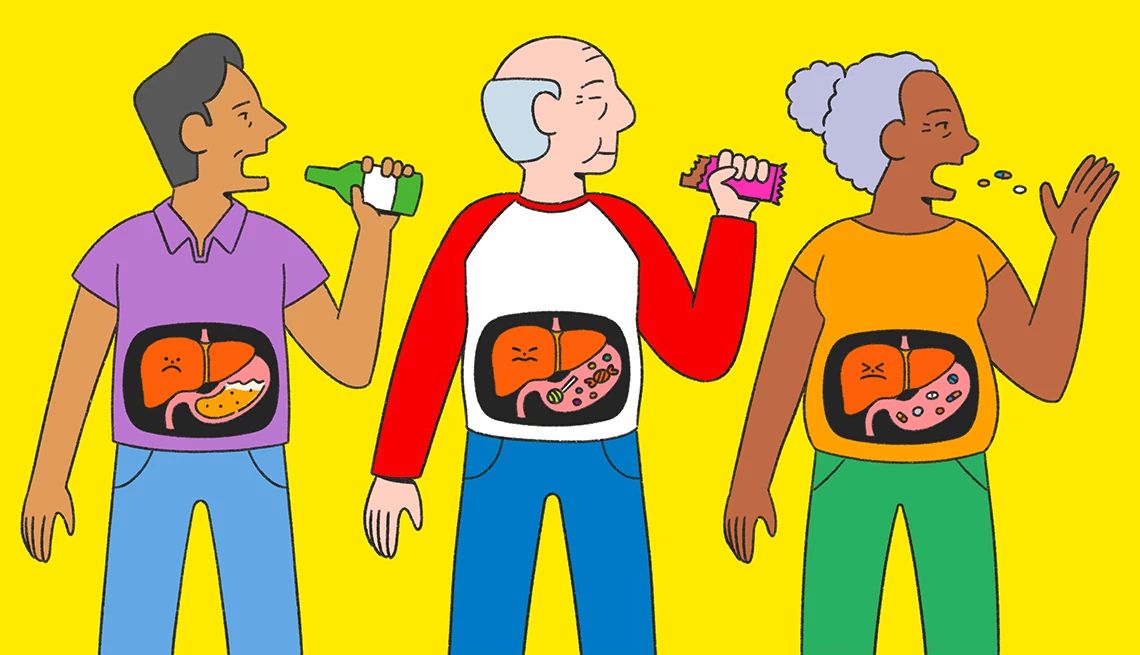
If there’s one thing the liver is not, it’s lazy. This hardworking organ is involved in several essential jobs — from breaking down food and storing nutrients to filtering toxins from the blood and fighting infections — which is why keeping your liver in top shape is key to staying healthy as you age.
Still, many of us engage in everyday activities that can damage the liver over time. Here are nine habits that health experts say you should change for the sake of your liver.
1. Skipping your workout
The liver doesn’t want you to be sedentary. In fact, it loves exercise, says Elliot Tapper, M.D., an associate professor in the division of gastroenterology and hepatology at the University of Michigan Medical School — “and, in particular, resistance exercise,” he adds.
“Even people who don’t lose weight, when they start doing resistance exercise, the training of the muscles changes the way that hormones circulate,” he says, and this helps “drain fat” out of the liver.
A small study published in the journal Gut found that sedentary adults diagnosed with nonalcoholic fatty liver disease (which occurs when too much fat builds up in the organ) who did eight weeks of resistance exercise saw a 13 percent reduction in liver fat, independent of weight loss. They also saw improved markers of blood sugar regulation, which is another sign of improved liver health.
That’s not to say you shouldn’t also be doing cardio. “Something that gets your heart pumping” benefits the liver, says James Hamilton, M.D., director of hepatology at Johns Hopkins Medicine.
“What we recommend generally is 30 minutes, five times a week, where you’re doing something where your heart is increasing in its output,” he says. “Even that, without weight loss, has been shown to reduce fatty liver and improve insulin resistance.”
In fact, an analysis of research published in The American Journal of Gastroenterology found that adults who participated in the recommended 150 minutes each week of moderate to intense aerobic activity, like a brisk walk, saw a greater improvement in liver fat than those who didn’t hit that mark.
2. Taking certain supplements
If you scroll social media long enough, you’ll no doubt encounter ads for supplements promising to heal your liver. Not so fast with the “buy now” button, doctors say.
“Your liver is like an automatic self-cleaning oven. It detoxifies by itself,” says Lisa Ganjhu, a gastroenterologist and hepatologist at NYU Langone Health. Take detoxifying supplements and you actually run the risk of injuring the organ.
“The supplements that give me a heart attack, that keep me up at night, are turmeric and green tea — and these are increasingly common,” Tapper says, emphasizing that the worry with these products is when they’re in supplement form and not as foods.
In fact, research published in 2024 in the journal JAMA Network Open found that turmeric and green tea supplements were the most commonly consumed of six supplements associated with liver toxicity.
Because supplements are not regulated by the Food and Drug Administration the same way other over-the-counter medications are, consumers don’t always know the ingredients in the bottle and the potency of these pills and powders, Hamilton explains. “And taking too much of it can potentially be toxic,” Ganjhu adds.
Most Popular
Health
It’s important to keep in mind that supplements can also interact with other medications you may be taking, and this can be hard on the liver “because everything goes through the liver,” Ganjhu says. This is why it’s key, she says, to keep your doctor up to date on all medications you are taking, including over-the-counter drugs and supplements.
3. Cutting out coffee
Believe it or not, drinking coffee can be a boon for the liver, so don’t skip out on your morning cup — just be sure to hold the cream and sugar. A study published in 2022 in the journal Clinical Gastroenterology and Hepatology by Tapper and his colleagues found that individuals who drank three or more cups of coffee a day showed reduced liver stiffness, which is associated with liver disease.
Another study, published in the journal Cureus, found that people at higher risk for liver disease who drink at least three to four cups of coffee have a lower risk of developing nonalcoholic fatty liver disease (also called metabolic dysfunction-associated steatotic liver disease, or MASLD), which is an increasingly common condition that affects about 100 million people in the U.S.
According to experts at the Cleveland Clinic, the antioxidants found in coffee may be the reason it’s so good for the liver. It’s also thought that compounds in coffee help to initiate a process that removes damaged cells from the liver.
Can’t handle the caffeine? Research published in BMC Public Health found that decaf comes with liver benefits as well.
4. Overindulging your sweet tooth
“The number one thing that the liver hates when it comes to food is sugar,” Tapper says — and especially high-fructose corn syrup, Ganjhu adds, which you’ll find in sweetened beverages, like juices and sodas, and processed snacks and desserts.
Not only is processing added sugar stressful on the liver, Tapper says, but the liver also turns the sugar into liver fat, which can lead to inflammation and scarring.
A meta-analysis of six studies, published in the European Journal of Nutrition in 2019, found that higher intake of sugar-sweetened beverages was associated with a 40 percent increased risk of fatty liver disease in both men and women. More recently, researchers from Mass General Brigham followed nearly 100,000 postmenopausal women and found that women who drank at least one sugar-sweetened beverage a day had a higher risk of developing liver cancer and dying from chronic liver disease than women who drank no more than three sugar-sweetened beverages a month. The study was published in 2023 in JAMA.
5. Drinking too much alcohol
This may not be a surprising addition to the list since alcohol’s effects on the liver are long established. But the science surrounding alcohol has changed in recent years, with many experts now saying no amount of alcohol is safe for human health.
“There’s never really a healthy amount of alcohol, and so less alcohol is always better, and you really want to keep under those seven drinks [per week] for a woman and 14 drinks [per week] for a man,” Hamilton says, citing the Centers for Disease Control and Prevention’s guidelines for moderate drinking.
However, there is good news for people who have been exceeding those guidelines: Cutting back your alcohol intake can partially improve the health of your liver, Tapper says. And, he adds, it’s never too late in life to cut it out completely and reverse liver damage.
“All of us who have practiced for several years have dozens of stories of people who thought that they were going to die from liver failure due to alcohol. They stopped drinking, and within a matter of months, their liver can heal all the way up to the point where nobody would ever know that they had liver failure months or weeks ago,” Tapper says.
reprinted from AARP.